
GST Cuts Boost Growth Prospects
Introduction
India’s economic policy is currently at a crucial juncture as it faces multiple challenges — global headwinds from US tariffs, volatile crude oil prices, and the pressing need to stimulate domestic growth. Finance Minister Nirmala Sitharaman has made it clear that the government’s strategy involves decisive steps like cutting Goods and Services Tax (GST) rates, ensuring vigilance in passing the benefits to the public, and continuing to source affordable crude oil from Russia despite international pressure.
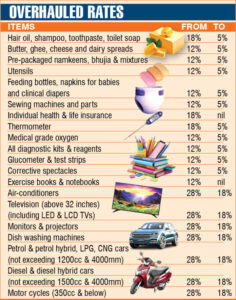

In a detailed media interaction, Sitharaman highlighted how the new GST reforms, effective from September 22, will not only reduce prices for consumers but also inject fresh momentum into domestic demand. She reassured that the government is committed to balancing global trade pressures with internal economic revival.
GST Cuts: A Push for Growth
The Finance Minister underscored that the GST Council’s decision to restructure rates will provide immediate relief to the common man while energizing the broader economy. The revised system introduces just two main slabs — 5% and 18%, replacing the earlier complicated structure of 5%, 12%, 18%, and 28%.
According to Sitharaman, this simplification serves two purposes:
-
Lower consumer costs – Essential and mid-range goods will become cheaper.
-
Stronger compliance – Businesses, particularly MSMEs and startups, will face reduced compliance burdens.
She emphasized, “We have a lot of work post-22nd September. It is a big vigilance exercise and we are confident the benefits will reach the common man.”
Vigilance and Monitoring of Rate Reduction
The government has designed a robust mechanism to ensure that the benefits of tax cuts reach households rather than being absorbed by middlemen or corporations. Sitharaman revealed that Members of Parliament (MPs) will actively participate in monitoring the impact on the ground.
Furthermore, industry associations and trade bodies are on board, agreeing to pass on savings to consumers. This collaborative vigilance exercise marks a significant shift in how GST changes are implemented.
GST and the Middle-Class Relief
Prime Minister Narendra Modi’s emphasis on simplifying the GST system has been a cornerstone of these reforms. Sitharaman disclosed that the Prime Minister had asked her eight months ago to explore ways to revamp the framework, with particular focus on easing the burden for the middle class.
This initiative, referred to informally as GST 2.0, is designed to:
-
Minimize disputes between businesses and authorities.
-
Ensure clarity and transparency in rules.
-
Reduce litigation and confusion that plagued the earlier system.
Addressing the Impact of US Tariffs
One of the major external shocks India is currently facing is the 50% punitive tariff imposed by the United States on certain Indian exports. This decision threatens sectors such as textiles, engineering goods, and IT services, potentially reducing India’s global trade competitiveness.
However, Sitharaman reassured that the domestic stimulus from GST cuts would offset this drag. By boosting consumption within India, industries will find alternative demand streams, thus reducing their dependence on volatile export markets.
She further indicated that special support packages for industries directly impacted by the US tariffs would be considered. This shows the government’s recognition of the need to protect exporters while strengthening domestic resilience.
Continued Import of Russian Oil
Amid western pressure to curtail trade with Russia, India has maintained a pragmatic stance. Sitharaman reiterated that oil is the costliest item in India’s import bill, and decisions are made based on price and logistics, not politics.
India will continue buying Russian crude as it offers competitive pricing and helps manage foreign exchange reserves. This approach ensures that fuel costs remain manageable, preventing inflationary pressures from escalating.
Sitharaman’s statement reflects India’s independent foreign policy in energy security, balancing geopolitical dynamics with domestic economic priorities.
Structural Features of GST 2.0
The revamped GST system promises significant improvements:
-
Simplified Compliance – Filing returns and registrations have been streamlined.
-
Faster Refunds – Exporters and small businesses will benefit from quicker refund processes, easing liquidity issues.
-
Balanced Taxation – Luxury and sin goods like tobacco, aerated drinks, high-end cars, yachts, and private jets will continue to attract a 40% tax, ensuring revenue neutrality and fairness.
-
Business-Friendly Framework – MSMEs and startups will face fewer compliance hurdles, encouraging entrepreneurship and innovation.

Economic Implications of GST Cuts
The reduction in tax rates is expected to:
-
Boost Consumer Spending: With goods becoming cheaper, households will increase their discretionary spending.
-
Stimulate Production: Increased demand will encourage businesses to expand production, creating a multiplier effect.
-
Generate Employment: Rising demand and production will translate into job creation, especially in manufacturing and services.
-
Enhance Investor Confidence: Simplified taxation and compliance will attract both domestic and foreign investors.
Balancing Growth and Revenue
While tax cuts reduce immediate government revenues, Sitharaman pointed out that long-term growth benefits will compensate for the shortfall. Enhanced consumption will increase indirect tax collections, and simplified compliance will widen the tax base.
Moreover, higher taxation on luxury and non-essential items ensures that wealthier sections contribute proportionately more, maintaining equity in the system.
Political and Governance Angle
The GST rate cut and reforms are also politically significant. They reflect the Modi government’s attempt to strengthen its middle-class base ahead of key elections while addressing criticisms of the earlier GST framework.
By involving MPs directly in the monitoring process, the government is showcasing transparency and accountability in ensuring the benefits reach people.
Global Reactions and Strategic Balance
India’s dual strategy — stimulating domestic demand through GST cuts and securing affordable energy by purchasing Russian oil — demonstrates its pragmatic approach to economic governance.
While western nations may view continued Russian oil purchases unfavorably, India’s stance emphasizes national interest. Simultaneously, the domestic policy shift towards GST simplification sends a strong signal to investors about India’s reform commitment.
Conclusion
Finance Minister Nirmala Sitharaman’s announcements mark a decisive moment for India’s economy. The combination of GST reforms, monitoring mechanisms, and strategic oil imports aims to shield the nation from external shocks while empowering the domestic market.
The government is betting on growth-led recovery, where reduced tax burdens drive consumption, support industries, and generate employment. At the same time, a fair taxation approach ensures fiscal stability.
India’s economic narrative, therefore, is one of resilience — balancing global challenges with internal reforms. As GST 2.0 takes effect, the focus will remain on ensuring that every Indian citizen, particularly the middle class, experiences the tangible benefits of these transformative changes.