
Hyderabad Begins Digital Census Drive
Hyderabad Prepares for Digital Census
Residents of Hyderabad are gearing up for a historic transition as the country moves toward its first-ever fully digital population census. Ahead of the launch of Census 2027 operations in Telangana, citizens have been given the opportunity to complete self-enumeration online before May 10.
The move marks a significant technological shift from the traditional paper-based census process that India followed for decades. Authorities believe the digital format will improve transparency, speed, and accuracy while making participation easier for citizens.
The first phase of Census 2027 in Hyderabad and other districts of Telangana is scheduled to begin on May 11.

Online Self-Enumeration Facility Introduced
For the first time, residents can voluntarily submit their household information online before physical verification by census officials.
The online self-enumeration process is currently available for residents living under:
- Greater Hyderabad Municipal Corporation
- Cyberabad Municipal Corporation
- Malkajgiri Municipal Corporation
Citizens can complete the process until midnight on May 10 by using the official census portal.
After successfully submitting the form online, households will receive a Self-Enumeration (SE) ID, which will later be verified by census officials during field visits.
Field Verification From May 11
While online submission offers convenience, physical verification will still remain an essential part of the census process.
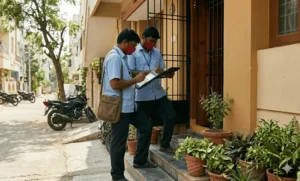
From May 11 to June 9, census enumerators will visit households across Hyderabad and other districts to verify the submitted information.
During the verification visit, citizens can provide their Self-Enumeration ID to the enumerator. Officials will then cross-check the information entered online.
If any discrepancy or incorrect data is found, the enumerator will collect fresh information directly from the household.
Authorities stated that this dual-layer system is intended to improve data reliability and minimize errors in the final census records.
India’s First Fully Digital Census
Earlier, Director of Census Operations in Telangana, Bharati Hollikeri, announced that Census 2027 would be conducted entirely in digital mode.
This marks a major change compared to previous censuses, including the 2011 exercise, which relied heavily on paper forms and manual data entry.
Officials described Census 2027 as a historic milestone because the entire process will now be supported through mobile applications and digital systems.
According to the state administration, the new approach is expected to:
- Enable real-time data collection
- Reduce manual errors
- Improve transparency
- Accelerate processing of information
- Simplify large-scale data management
The government believes that digital census technology will significantly modernize India’s demographic data collection system.
Two Major Phases of Census 2027
The Census 2027 process will be carried out in two separate phases.
Phase One: House Listing and Housing Census
The first phase will take place from May 11 to June 9 and will focus on house listing and housing-related information.
Officials will gather details regarding:
- Type and condition of houses
- Access to basic amenities
- Ownership patterns
- Household infrastructure
- Availability of utilities and technology
This phase is essential for understanding living conditions and infrastructure needs across urban and rural regions.
Phase Two: Population Enumeration
The second phase is expected to be conducted in February 2027.
This stage will focus on population-related details, including demographic information, family structures, and socio-economic data.
Thousands of enumerators and supervisors are expected to participate across Telangana to ensure smooth execution of both phases.
33 Questions in Self-Enumeration Form
The online self-enumeration form contains 33 detailed questions covering housing conditions, amenities, household assets, and demographic information.
The questions are designed to provide a comprehensive understanding of living standards, economic conditions, and infrastructure availability.
Some of the major questions include:
- Predominant material used for flooring
- Predominant wall material
- Predominant roof material
- Usage type of the census house
- Overall condition of the house
- Household number
- Total number of residents
- Name and gender of the household head
- Social category of the household head
- Ownership status of the house
- Number of rooms in possession
- Number of married couples in the household
The form also seeks information related to access to essential services and utilities.
Focus on Basic Amenities
A major section of the questionnaire focuses on household amenities and access to public infrastructure.
Citizens will be asked to provide details regarding:
- Main source of drinking water
- Availability of drinking water within premises
- Main source of lighting
- Availability of toilets
- Type of latrine facility
- Wastewater disposal systems
- Availability of bathing facilities
- Presence of a kitchen
- LPG or PNG gas connection
This data will help governments assess gaps in public services and plan welfare programs more effectively.
Technology and Digital Access Questions
Reflecting the growing importance of technology in modern life, Census 2027 also includes several questions about digital and communication access.
Households will be asked whether they possess:
- Radio or transistor
- Television
- Internet access
- Laptop or computer
- Mobile phones or smartphones
Officials believe such data will help policymakers better understand the digital divide and technology penetration across different social and economic groups.
Transportation and Lifestyle Indicators
The questionnaire also collects information about transportation assets and consumption patterns.
Questions include ownership of:
- Bicycle
- Scooter or motorcycle
- Car, jeep, or van
Additionally, households will be asked about their primary cereal consumption patterns.
These details are expected to provide insights into economic conditions, mobility patterns, and lifestyle indicators across regions.
Mobile Number for Census Communication
One notable addition in Census 2027 is the request for mobile numbers.
Authorities clarified that mobile numbers collected during the process will be used strictly for census-related communication purposes only.
Officials emphasized that data privacy and confidentiality will remain protected under census regulations.
Importance of Accurate Census Data
Census exercises play a vital role in national planning and governance.
The information collected helps governments formulate policies related to:
- Housing
- Healthcare
- Education
- Employment
- Urban development
- Transportation
- Welfare schemes
Accurate census data is also essential for infrastructure planning, resource allocation, and implementation of social programs.
With rapid urban expansion in Hyderabad and Telangana, officials believe the updated census data will help authorities better understand changing population patterns and development needs.
Role of Enumerators and Supervisors
Thousands of trained enumerators and supervisors will participate in the census operation throughout Telangana.
Their responsibilities include:
- Conducting field verification
- Ensuring data accuracy
- Assisting citizens during enumeration
- Identifying discrepancies
- Uploading verified information digitally
Authorities stated that enumerators have received training in handling the digital census platform and mobile application system.
Digital Census Expected to Improve Efficiency
Government officials believe that the digital approach will drastically improve operational efficiency.
In earlier paper-based systems, large amounts of time were spent on manual form collection, transportation, data entry, and verification.
By shifting to digital enumeration, authorities expect:
- Faster data compilation
- Reduced paperwork
- Improved storage security
- Better monitoring capabilities
- Faster release of census findings
The transition is also expected to reduce logistical challenges and administrative costs over time.
Public Participation Crucial
Officials are encouraging residents to participate actively in the self-enumeration process.
Early online completion can help reduce the workload during field verification and improve overall efficiency.
Authorities have advised citizens to provide accurate and truthful information while filling out the forms to avoid complications during verification visits.
Conclusion
Census 2027 represents a major transformation in India’s demographic data collection process. With Hyderabad and Telangana preparing for the country’s first fully digital census, the exercise marks a significant step toward modern governance and technology-driven administration.
The introduction of online self-enumeration, mobile applications, and digital verification systems highlights the government’s efforts to improve efficiency, transparency, and accuracy.
As the first phase begins on May 11, millions of residents across Hyderabad and Telangana are expected to participate in this large-scale exercise that will shape planning and policymaking for years to come.