
Hyderabad Student Dies in US
A Dream Cut Short: Hyderabad Family’s Agonizing Wait After Son’s Tragic Death in the US
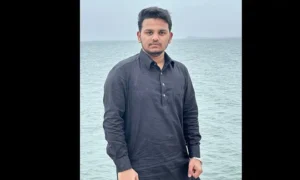
A cloud of profound grief has descended upon a quiet neighborhood in Old Malakpet, Hyderabad, where the family of Mohammed Zaid is trapped in a nightmarish limbo. Their son, a young man who journeyed to the United States to chase an academic dream, has tragically died following a hit-and-run accident. Now, amidst their unimaginable sorrow, they are waging a desperate battle against bureaucracy and distance, pleading with the US Consulate in Hyderabad for an emergency visa to allow them to travel to Connecticut, recover his body, and bring their son home one final time.
The Aspiration: A Journey to the University of Bridgeport
Mohammed Zaid, like thousands of ambitious Indian students each year, had embarked on a journey to the United States to build a brighter future. He was a student at the University of Bridgeport in Connecticut, pursuing a graduation program in health profession and related clinical science. His choice of field spoke of a desire to serve, to heal, and to contribute to a world beyond his own. His home in Old Malakpet was filled with the pride and hope that parents invest in a child who dares to dream on a global scale. He represented the very essence of the ambitious Indian youth—venturing far from home, carrying the weight of expectations, and striving for excellence in a competitive environment.
The Tragedy: A Routine Errand Turns Fatal
The fabric of this dream was violently torn on a seemingly ordinary Saturday. As per details provided by his friends and conveyed to his devastated family, Zaid had stepped out to perform a mundane, everyday task: buying groceries. It was a slice of normal life for a student adjusting to independence abroad. However, on his way, the unthinkable happened. He was struck by an unknown vehicle in a hit-and-run accident, a callous act that left him with catastrophic injuries.
Emergency services rushed him to St. Vincent’s Medical Centre, part of the Hartford HealthCare network in Connecticut. For five agonizing days, he fought for his life while attached to a ventilator, completely unconscious. Medical teams worked tirelessly, but the injuries were too severe. His family in Hyderabad, over 12,000 kilometers away, could only wait and pray, clinging to updates from his friends and the hospital, their lives suspended in a vortex of anxiety and dread. The inevitable, heartbreaking news finally came: Mohammed Zaid had succumbed to his injuries without ever regaining consciousness.
The Agony of Distance: A Family’s Helpless Grief
The cruelest aspect of such an international tragedy is the immense distance. For Zaid’s father, Mohd Ismail, his mother, and his loved ones, the pain is compounded by a devastating powerlessness. They were unable to be at his bedside in his final moments, to hold his hand, or to offer words of comfort. Their grief is being processed through phone calls, digital messages, and a chasm of separation that makes the loss feel surreal and incomplete.
The rituals of mourning—seeing, touching, and performing the last rites—are a crucial part of the healing process in any culture, and especially so in India. The inability to perform these rites for their son has left the family’s grief raw and unresolved. Their home, once filled with hope for his future, is now a place of silence and anguish, a constant reminder of the ocean that separates them from their child’s final resting place.
The Plea for Help: Navigating a Bureaucratic Labyrinth
In the immediate aftermath of the tragedy, the family’s focus has sharply shifted from grief to a pressing practical nightmare: how to get to the United States. Indian citizens require a visa to enter the US, a process that is typically lengthy, involving interviews and extensive documentation. For a family grappling with sudden loss, this standard procedure is an insurmountable obstacle.
This is where the concept of an emergency visa, or a humanitarian visa, comes into play. US diplomatic missions have provisions to expedite visa appointments in cases of dire need, such as the death of an immediate family member abroad. The family of Mohammed Zaid has made a desperate appeal to the US Consulate General in Hyderabad to grant them this emergency visa. Their request is simple, human, and urgent: they need to travel to Connecticut to identify their son’s body, complete the necessary legal and medical formalities, and accompany his remains back to Hyderabad for a dignified burial.
They have also reached out to the State government of Telangana, seeking intervention and support to facilitate this process through diplomatic channels. The urgency cannot be overstated. With each passing hour, their distress deepens.
A Recurring Nightmare: The Vulnerable Indian Student Abroad
Tragically, the story of Mohammed Zaid is not an isolated incident. The Indian diaspora, particularly the massive student community in countries like the US, Canada, Australia, and the UK, has been repeatedly shaken by such heartbreaking news. Students often face unique vulnerabilities: they are in a new country, sometimes without a robust local support network, they may be unfamiliar with local laws and customs, and they often take on part-time jobs that require travel during odd hours, increasing their risk.

Cases of accidents, mental health struggles leading to suicide, and even violent crimes frequently make headlines, prompting calls for better support systems. These incidents highlight the need for:
-
Enhanced Pre-Departure Orientations: Training that goes beyond academics and visas to include practical safety advice, mental health resources, and emergency protocols.
-
Stronger University Support Networks: Ensuring international student offices are equipped to provide immediate and compassionate crisis response, including liaising with families abroad.
-
Streamlined Cross-Border Emergency Protocols: A clearer, more compassionate, and faster process between governments to assist families in times of unimaginable loss.
The Road Ahead: A Test of Compassion and Efficiency
As the family of Mohammed Zaid waits, their situation poses a critical test for the systems designed to handle such humanitarian crises. The response of the US Consulate in Hyderabad will be closely watched. A swift, empathetic granting of visas would be a small but significant act of compassion, allowing a grieving family to begin their journey toward closure.
For now, the family in Old Malakpet remains in a state of suspended animation. Their son’s dream of becoming a healthcare professional was brutally ended on a Connecticut street. Their only dream now is to bring him home. The world watches, hoping that bureaucracy will not add to their pain, and that the bridge between nations can be crossed quickly in the name of basic human dignity and compassion. The memory of Mohammed Zaid deserves nothing less.