
Iran Hormuz Warning Escalates Tensions
Iran Hormuz Warning Escalates Tensions
Regional tensions in West Asia escalated dramatically after Iran issued a stern warning to Bahrain and other Gulf states regarding access to the strategically critical Strait of Hormuz.
The warning came amid increasing military, diplomatic, and economic tensions linked to the ongoing confrontation between Iran and the United States. Concerns have also intensified due to shipping disruptions, naval blockades, Israeli military operations in Lebanon, and uncertainty surrounding nuclear negotiations.
On May 9, Ebrahim Azizi, who heads the national security and foreign policy committee in the Iranian parliament, issued a strong public statement through social media.
He warned Gulf governments, including Bahrain, against supporting American-backed initiatives targeting Tehran.
Azizi stated that siding with Washington could result in severe long-term consequences and cautioned regional states not to “close the doors of the Strait of Hormuz” to themselves permanently.
Strategic Importance of Strait of Hormuz
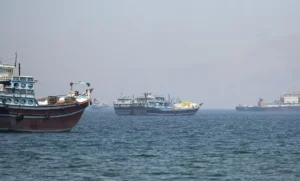
The Strait of Hormuz remains one of the world’s most important energy corridors.
A significant portion of global oil and liquefied natural gas exports passes through the narrow waterway connecting the Persian Gulf to international shipping routes.
Any disruption in Hormuz directly affects:
- Global energy markets
- International trade
- Oil prices
- Maritime security
Because of its strategic importance, tensions involving the strait often trigger global concern.
The latest developments have once again raised fears of wider instability across the Gulf region.
United States Revises UN Resolution
The latest escalation followed revisions made by the United States to a proposed United Nations Security Council resolution regarding Iran.
The original draft reportedly included references to Chapter VII of the UN Charter, a provision that can authorize sanctions or military action.
However, Washington later removed that clause from the revised proposal.
Despite this change, the draft still warned Tehran that the Security Council could consider “effective measures,” including sanctions, if Iran failed to comply with international demands.
The proposal also reaffirmed the right of countries to defend vessels operating in the Strait of Hormuz.
Iran viewed the continued pressure as part of broader American efforts to increase strategic and military pressure on Tehran.

Bahrain Arrests Alleged IRGC-Linked Group
Regional tensions further intensified after Bahrain announced the arrest of 41 individuals allegedly connected to Iran’s Islamic Revolutionary Guard Corps, commonly known as the IRGC.
Bahraini authorities claimed the individuals were linked to activities threatening national security.
Following the arrests, Kuwait publicly expressed solidarity with Bahrain and praised its security forces.
Kuwait’s Foreign Ministry commended Bahrain’s vigilance and described the security response as effective in countering alleged threats linked to Iranian-backed groups.
The development further complicated already strained relations between Iran and several Gulf countries.
Shipping Crisis Deepens in Hormuz
Commercial shipping activity through the Strait of Hormuz has reportedly declined sharply amid fears of military escalation.
According to maritime monitoring reports, no ships passed through the waterway during a 24-hour period, compared to the normal average of more than 130 vessels daily before tensions intensified.
The disruption has raised alarm across global markets because the strait serves as a major route for oil exports from Gulf nations.
Analysts warned that prolonged instability could:
- Increase global oil prices
- Affect supply chains
- Disrupt international trade
- Create economic uncertainty worldwide
The situation has already begun impacting shipping operations and insurance costs for vessels operating in the region.
US Naval Blockade Operations Continue
United States Central Command, commonly known as CENTCOM, announced that American naval forces had redirected dozens of commercial vessels and disabled several ships since April 13.
The operations were reportedly part of a broader naval blockade targeting Iranian ports.
One of the latest incidents involved Iranian-flagged oil tankers operating near the Gulf of Oman.
CENTCOM claimed that US Navy aircraft launched from the USS George H.W. Bush disabled the vessels after they allegedly attempted to access Iranian ports despite blockade restrictions.
The US military also released images of fighter aircraft operating over the Middle East, emphasizing that American forces remained “mission ready.”
Iran Rejects Reports of Missing Persons
Iranian officials denied reports suggesting several people had gone missing following alleged American attacks on Iranian fishing and cargo vessels near the Persian Gulf.
The reports emerged after Iranian state-linked media referenced alleged strikes involving American warplanes near Hormuz.
However, officials later rejected claims regarding missing individuals, further adding to confusion surrounding recent military developments in the region.
Diplomatic Efforts Continue
Despite ongoing tensions, diplomatic efforts to prevent wider conflict are continuing.
Marco Rubio stated that Washington was awaiting Tehran’s response to a proposal aimed at formally ending the current confrontation.
The proposal reportedly includes:
- Nuclear negotiations
- Regional security discussions
- De-escalation measures
- Maritime security guarantees
Rubio said the United States expected a response from Iran “within hours,” though no official reply had been publicly issued.
The negotiations are viewed as critical because failure could lead to further escalation in an already unstable region.
Iran Criticizes American Actions
Abbas Araghchi sharply criticized the United States, accusing Washington of choosing “reckless military adventure” instead of diplomacy.
Araghchi insisted that Iran would not surrender to external pressure and defended Tehran’s position regarding regional security and sovereignty.
Iranian officials continue to argue that the country is being unfairly targeted through sanctions, military threats, and economic pressure.
Lebanon Conflict Intensifies
At the same time, violence along the Israel-Lebanon border intensified.
Israel Defense Forces confirmed that explosive drones launched from Lebanon landed near Israeli border areas.
Several Israeli reservists were reportedly injured, including one soldier said to be in serious condition.
Israel also claimed it intercepted additional projectiles launched by Hezbollah.
The growing cross-border attacks have raised fears of broader regional conflict involving multiple actors.
Israeli Airstrikes Kill Civilians
Lebanese authorities reported that at least 18 people were killed in Israeli airstrikes across southern Lebanon.
Among those killed were children and civilians in several towns, including Nahiteih, Nahrain, Saadiyat, Haboush, and Saksakiyeh.
Lebanese state media also reported additional casualties from separate strikes in southern regions.
The civilian deaths have intensified international concern regarding humanitarian conditions and the risk of wider conflict.
Israel Orders Evacuations
The Israeli military issued evacuation warnings for residents of multiple towns and villages in southern Lebanon.
Authorities warned civilians to leave areas where Israeli forces expected to conduct operations against Hezbollah positions.
The evacuation orders covered several communities, with Israel stating it would soon act “forcefully” in those areas.
Qatar Calls for Dialogue
Qatar urged both Iran and the United States to respond positively to mediation efforts aimed at reducing tensions.
Qatar’s Prime Minister and Foreign Minister, Sheikh Mohammed bin Abdulrahman bin Jassim Al Thani, discussed the crisis with Egyptian officials and stressed the importance of dialogue.
Qatar has frequently played a mediating role in regional conflicts and is again attempting to facilitate diplomatic engagement.
Western Allies Increase Security Presence
The United Kingdom announced plans to deploy the naval destroyer HMS Dragon to West Asia.
British officials said the deployment would support maritime security and future multinational efforts aimed at stabilizing shipping routes around Hormuz.
Meanwhile, Germany reaffirmed its commitment to NATO and stressed the importance of preventing Iran from acquiring nuclear weapons.
Caspian Sea Becomes Critical Supply Route
As maritime tensions continue around Hormuz, reports indicate that the Caspian Sea has become increasingly important for Iran’s trade and military logistics.
Russia is reportedly supplying commercial goods and drone components to Iran through the landlocked waterway.
This route allows Tehran to partially bypass disruptions affecting Gulf shipping lanes.
Iran’s World Cup Participation Confirmed
Amid the geopolitical tensions, Iran’s football federation confirmed that the national team would still participate in the 2026 FIFA World Cup hosted by the United States, Mexico, and Canada.
However, Iranian officials demanded guarantees related to:
- Visas
- Security
- Accommodation
- Respect for national symbols
The issue gained attention after Canadian authorities reportedly denied entry to a senior Iranian football official because of alleged links to the IRGC.
Internet Blackout Continues in Iran
Internet monitoring organization NetBlocks reported that Iran’s internet blackout had entered its 11th week.
The restrictions have reportedly caused severe disruption to:
- Businesses
- Communications
- Daily life
- Access to information
Digital restrictions remain another major concern amid the ongoing crisis.
Conclusion
The rapidly escalating tensions surrounding Iran, the Strait of Hormuz, Lebanon, and regional security have created one of the most volatile situations in West Asia in recent years.
Iran’s warning to Bahrain and Gulf nations, combined with shipping disruptions, military deployments, and rising violence along the Israel-Lebanon border, underscores the fragile state of regional stability.
While diplomatic efforts continue behind the scenes, uncertainty remains high as governments across the world closely monitor developments that could significantly impact global security, energy markets, and international trade.