
Owaisi supports more children in South India
Owaisi Aligns with South Indian Leaders on Population Increase
All India Majlis-e-Ittehadul Muslimeen (AIMIM) president Asaduddin Owaisi expressed his support for recent calls by Tamil Nadu and Andhra Pradesh chief ministers, MK Stalin and N. Chandrababu Naidu, urging South Indian states to consider having more children. This shared stance highlights concerns over the declining Total Fertility Rate (TFR) in South India, which has dropped below the national average and could potentially lead to reduced political representation in national assemblies.
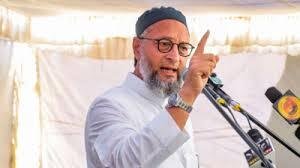

Concern Over South India’s Population Decline
According to Owaisi, both Stalin and Naidu have a valid reason to address the low population growth in their respective states. The AIMIM leader pointed out that South India’s fertility rates have fallen sharply, creating an imbalance that may impact the region’s representation in the Indian Parliament. “If delimitation is conducted based on population, South Indian states will be adversely affected with fewer assembly and Parliamentary seats,” he stated, emphasizing how this population shift could reduce Southern states’ influence in national politics.
Potential Impact on Political Representation
Owaisi’s comments focused on the political consequences of population dynamics. He stressed that the South’s reduced population growth could lead to decreased assembly seats in favor of more populous Northern states. “If seats are adjusted for regions with larger populations, it would unfairly dilute South India’s representation,” he argued, voicing concern over how demographic changes might undermine Southern states’ authority and decision-making power at the national level.

Media Perception and Public Opinion
Owaisi also addressed the media’s double standards in interpreting similar statements by different political leaders. “Had I called for an increase in South Indian population, it would likely be labeled as ‘Population Jihad’,” he remarked. However, he observed that when Chandrababu Naidu and Stalin made such remarks, they were met with understanding and received differently. According to Owaisi, this reflects a biased perspective that influences public opinion on important social issues.

Naidu’s and Stalin’s Statements on the Need for More Children
The issue of South India’s shrinking fertility rate has gained prominence following comments by Naidu and Stalin. Chandrababu Naidu recently proposed a new initiative called “population management” for Andhra Pradesh, aimed at addressing the rising number of elderly individuals by promoting larger families. Naidu highlighted the challenges posed by a reduced fertility rate of 1.6 in the region, below the national average of 2.1. “If this rate drops further, by 2047, we could see predominantly elderly populations in Andhra Pradesh and other Southern states,” Naidu warned, adding that rural areas are increasingly populated by older residents as younger generations move to urban centers.
Naidu also proposed a potential legislative measure to incentivize larger families, suggesting that candidates for local elections could be required to have more than two children. This proposal aims to encourage population growth while balancing the demographic shift.
Stalin’s Support for Population Growth
MK Stalin, the Chief Minister of Tamil Nadu, echoed Naidu’s concerns, voicing support for increased family sizes in response to the declining Lok Sabha constituencies in the South. Stalin questioned, “Why should we restrict ourselves to having fewer children?” and humorously added, “Why not aim for 16 children?” His comments reflect the sentiment that Southern states’ lower fertility rates should be addressed before they impact political representation at the national level.
National Context and Realignment of Constituencies
Both Stalin and Naidu’s remarks respond to reports suggesting that the Union government may consider a realignment of constituencies based on population. With South India’s fertility rates decreasing, its influence within Parliament could be diminished if constituency boundaries are redrawn according to population density. Such changes would likely benefit regions with higher population growth, primarily in the North, further shrinking Southern states’ share of seats in the Lok Sabha.
Owaisi’s Call for Fair Representation
As a representative of Hyderabad, Owaisi supports calls for increasing the population in Southern states to maintain equitable representation in the Indian political landscape. He expressed his view that the declining fertility rate and smaller family size should not come at the cost of reduced assembly and Parliamentary seats. Instead, he advocates for policies that recognize the South’s contributions to lowering population growth while protecting its political standing.
In his support of Naidu and Stalin’s stance, Owaisi underscores the importance of demographic balance to ensure that Southern states retain their influence in national decision-making processes. While the media’s portrayal of such issues remains variable, he hopes these discussions bring attention to the need for fair representation across all regions.
Disclaimer:
This article summarizes statements by public officials on population trends and their implications for South Indian states. The information presented is based on recent statements made in public forums and should be interpreted in the context of the socio-political landscape.