


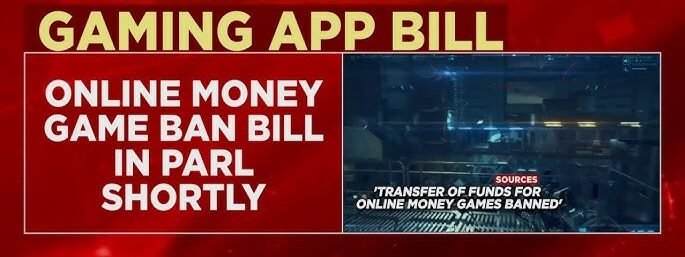
Parliament Bans Online Money Games
A New Digital Dawn: Parliament Passes Sweeping Legislation to Ban Online Money Games
Parliament of India passed The Promotion and Regulation of Online Gaming Bill, 2025
In a landmark move that is set to radically reshape India’s digital entertainment landscape, the Parliament of India passed The Promotion and Regulation of Online Gaming Bill, 2025, on Thursday. The Rajya Sabha approved the bill without debate amid disruptions, a day after it was passed by the Lok Sabha. Piloted by the Minister of Electronics and IT, Ashwini Vaishnaw, the legislation represents the government’s most decisive effort to date to draw a clear legal distinction between permissible online gaming and illicit betting, aiming to protect citizens from the perceived social and financial harms of unregulated gambling while fostering a healthier digital ecosystem.
The bill’s passage marks the culmination of years of debate, legal challenges, and growing societal concern over the proliferation of online platforms offering real-money games. It introduces a stringent, nationwide framework that not only outlaw specific activities but also systematically chokes their financial and promotional lifelines. This holistic approach signals a zero-tolerance policy towards what the government categorizes as “money games,” positioning the legislation as a measure for consumer protection and public welfare.
The Core of the Legislation: A Two-Pronged Approach
The bill is structured around a dual mandate: prohibition and promotion. Its most impactful provisions are its prohibitive measures, which are sweeping in their scope.
1. The Comprehensive Ban on “Money Games”:
The legislation outlaws all forms of online games where players risk money on an uncertain outcome. This broad definition casts a wide net, explicitly banning:
-
Online Fantasy Sports: Including popular platforms where users create virtual teams based on real athletes and win money based on their statistical performance.
-
Online Card Games: This includes games like Poker, Rummy, and other card games when played with real money stakes.
-
Online Lotteries: Any digital lottery system falls under the purview of the ban.
-
All forms of Satta and Jua: The bill uses these traditional terms to encompass any and all forms of online betting and gambling.
This unified ban seeks to resolve the long-standing legal ambiguity where certain games like rummy and fantasy sports were considered games of skill (and thus legal) in some states but not in others, creating a regulatory grey area that numerous companies exploited.
2. Severing the Financial and Promotional Arteries:
Recognizing that a ban on the activity itself is ineffective without targeting its ecosystem, the bill contains crippling provisions for advertising and financial transactions.
-
Advertising Prohibition: The bill seeks to prohibit all advertisements related to these banned “money games.” This is a critical move to curb their visibility, prevent user acquisition, and stop the normalization of gambling-like behavior, especially among youth. Violations can attract imprisonment of up to two years and/or a fine of up to Rs 50 lakh.
-
Financial Transaction Blockade: In what is perhaps the most potent clause, the bill bars banks, payment gateways, and other financial institutions from facilitating or processing any fund transfers for these games. This effectively cuts off the oxygen supply to these platforms, making it nearly impossible for them to operate within the formal Indian economy. The penalties for facilitation are even steeper: imprisonment for up to three years and/or a fine of up to Rs 1 crore.
3. Enhanced Penalties for Recidivism:
The legislation adopts a strict stance against repeat offenders. Those found violating the law more than once face significantly enhanced penalties, including imprisonment ranging from three to five years and fines that can go up to Rs 2 crore. This is designed to act as a major deterrent for large corporate entities that might consider flouting the rules.
The Other Side of the Coin: Promoting eSports and Social Gaming
While the ban on money games has captured headlines, the bill also carries a positive mandate. It explicitly seeks to promote and regulate “eSports” and “online social gaming.” This distinction is crucial.
-
eSports: Refers to competitive, organized video gaming (like Dota 2, Counter-Strike, Valorant) where players or teams compete, typically for a fixed prize pool provided by organizers, not directly staked by the players themselves.
-
Online Social Gaming: Encompasses casual, non-competitive games played for entertainment without any money at risk, such as word games, casual puzzles, or social casino games without real-money payouts.
By creating this legal firewall, the government aims to nurture a vibrant, legitimate online gaming industry centered on skill, entertainment, and sportsmanship, while eliminating the element of financial speculation and addiction associated with gambling.
The Parliamentary Process and Political Context
The bill’s passage in the Rajya Sabha “without debate amid din” is indicative of the current parliamentary atmosphere. However, it also suggests a broad political consensus on the need for such legislation. The rejection of amendments moved by Opposition members further underscores the government’s determination to pass the bill in its intended form. The rapid sequential approval by both houses within two days points to it being a high-priority item on the government’s legislative agenda.
Implications and the Road Ahead
The enactment of this bill will have far-reaching consequences:
-
Industry Upheaval: Numerous startups and established companies in the fantasy sports and online rummy/poker space will face an existential threat and will likely need to pivot their business models entirely or cease operations in India.
-
Consumer Impact: Millions of users who engaged with these platforms will no longer have legal access to them.
-
Jurisdictional Challenges: The bill sets the stage for potential legal battles from affected companies, who may challenge its constitutional validity and the classification of games like fantasy sports as gambling.
-
Black Market Concerns: Critics argue that such bans often drive activity towards underground, unregulated offshore platforms, which could pose greater risks to consumers without any legal recourse.
In conclusion, The Promotion and Regulation of Online Gaming Bill, 2025, is a bold and controversial piece of legislation. It reflects a paternalistic approach to governance, prioritizing consumer protection and social welfare over free-market principles in a digitally sensitive area. Its success will ultimately be measured by its ability to curb addiction and financial ruin while successfully fostering the growth of a positive and creative eSports industry, all without pushing activity into a dangerous and unregulated black market.