
Trump Cancels Meeting With Putin
Trump Cancels Meeting With Putin Amid Stalled Negotiations and New Sanctions
White House Confirms Summit Cancellation
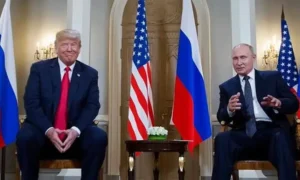
Washington: In a major diplomatic development, United States President Donald Trump announced the cancellation of his planned meeting with Russian President Vladimir Putin, attributing the decision to the absence of tangible progress in diplomatic negotiations between the two nations. Addressing reporters at the White House on Wednesday, Trump stated, “We cancelled the meeting with President Putin. It just didn’t feel right to me.” He emphasized that the talks had failed to move toward meaningful resolutions.
Trump elaborated, “It didn’t feel like we were going to get to the place we have to get. So, I cancelled it, but we’ll do it in the future.” The decision marks a significant shift in the US administration’s approach to Moscow, particularly amid escalating geopolitical tensions in Eastern Europe.
The cancellation followed initial plans for a bilateral summit in Budapest, Hungary, where both leaders were expected to engage in discussions concerning the ongoing Russia-Ukraine conflict and broader global security issues. However, Trump later told reporters that such a meeting would be “a waste of time” given the current diplomatic impasse.
Growing Frustration Over Diplomatic Deadlock
The US President expressed open frustration with the stalled negotiations between Washington and Moscow. “In terms of honesty, the only thing I can say is, every time I speak with Vladimir, I have good conversations, and then they don’t go anywhere. They just don’t go anywhere,” Trump admitted.
The remark reflects growing impatience within the White House regarding the Kremlin’s stance on Ukraine and broader strategic disagreements that have hindered meaningful progress. The diplomatic deadlock has persisted despite multiple rounds of discussions at various levels, including senior officials’ engagements and direct leader-to-leader communication.
New Sanctions on Russian Oil Giants
Coinciding with the summit cancellation, the White House unveiled a fresh wave of economic sanctions targeting Russia’s vital oil export sector. The US Treasury Department announced restrictive measures against two of Russia’s largest energy conglomerates — Rosneft and Lukoil — and their subsidiaries.
The sanctions, part of a broader strategy to exert pressure on Moscow, are intended to curtail Russia’s ability to finance its ongoing military operations in Ukraine. The Treasury also warned that additional punitive actions could not be ruled out if Russia failed to show commitment toward de-escalation.
Trump described the sanctions as “tremendous” and “very big,” acknowledging their potential impact on the Russian economy while expressing hope for a swift resolution to the war. “We hope that they won’t be on for long. We hope that the war will be settled,” Trump stated during his meeting with NATO Secretary General Mark Rutte at the White House.
Trump’s Renewed Push for Peace
For the first time in his second term, Trump’s administration has imposed new sanctions on Moscow, signaling renewed efforts to bring about an end to the protracted war in Ukraine. The US President’s remarks suggested a recalibrated approach, balancing economic pressure with calls for negotiation.
Referring to his interactions with Putin, Trump said, “Every time I speak with Vladimir, I have good conversations, and then they don’t go anywhere. He’s fighting a war. He’s in a war. It’s two very competent sides, and that’s the way war is. You never know with war, but I would say that it’s time to make a deal.”
The statement underscores Trump’s belief that diplomatic dialogue remains the only viable path forward. His administration appears to be focusing on pushing both Moscow and Kyiv toward a ceasefire framework that could potentially halt further escalation.

Prelude to the Decision: High-Level Diplomatic Calls
The decision to cancel the Budapest meeting reportedly followed a crucial phone conversation between US Secretary of State Marco Rubio and Russian Foreign Minister Sergey Lavrov earlier in the week. According to White House officials, the discussion revealed significant differences in both nations’ positions, leading Trump to conclude that direct talks with Putin would be unproductive at this juncture.
Trump had previously held a two-and-a-half-hour-long phone call with the Russian President, describing it as a “great conversation” that yielded “progress.” However, the momentum appeared to stall soon afterward, particularly as new intelligence reports highlighted continued Russian military activity near eastern Ukraine.
Engagement With Ukrainian Leadership
In a parallel diplomatic move, Trump hosted Ukrainian President Volodymyr Zelensky at the White House shortly after his conversation with Putin. Describing the meeting as “very interesting and cordial,” Trump highlighted his commitment to fostering dialogue between the warring nations.
“The meeting with President Volodymyr Zelensky of Ukraine was very interesting and cordial, but I told him, as I likewise strongly suggested to President Putin, that it is time to stop the killing and make a DEAL!,” Trump wrote on his social media platform, Truth Social.
He went on to suggest that both leaders should “stop where they are” and “claim victory,” a comment interpreted by some analysts as an attempt to push for a frozen conflict or ceasefire scenario that would allow both sides to save face politically.
Shift in Trump’s Foreign Policy Focus
Following his recent involvement in brokering a ceasefire in Gaza, Trump’s diplomatic focus has now pivoted toward the Russia-Ukraine conflict. Analysts view this as part of his broader foreign policy strategy aimed at positioning the United States as a central mediator in major international disputes.
Trump’s recent statements suggest a more pragmatic approach that prioritizes de-escalation and economic stability over prolonged confrontation. “It’s time to make a deal,” he reiterated, signaling that Washington’s patience with the ongoing hostilities is wearing thin.
Aftermath of the Alaska Summit
The latest developments follow Trump’s earlier summit with Putin in Alaska in August, which concluded without a formal agreement. Despite the absence of tangible outcomes, the meeting had been touted by both sides as a step toward dialogue. However, in hindsight, the event appears to have done little to narrow the deep divisions between Washington and Moscow.
Officials within the administration indicated that although the Alaska discussions covered key issues such as nuclear arms control, cyber security, and the situation in Ukraine, neither side was willing to make concessions significant enough to advance peace efforts.
Impact of Sanctions and International Reactions
The newly announced sanctions targeting Rosneft and Lukoil have been met with sharp criticism from Moscow. Russian officials described the measures as “economic warfare” and warned of potential retaliatory steps against US interests. Analysts predict that the sanctions could significantly disrupt Russia’s oil exports, especially to Western markets, further straining its wartime economy.
Meanwhile, European allies have largely welcomed Washington’s renewed commitment to economic pressure. Several NATO members have expressed optimism that the sanctions could accelerate diplomatic negotiations by limiting Russia’s financial capabilities to sustain its military operations.
Financial markets responded cautiously to the news, with global oil prices experiencing minor fluctuations as traders assessed the potential impact on supply chains.
Trump’s Political Calculations and Future Engagements
Political observers suggest that Trump’s decision to cancel the meeting with Putin also carries domestic political undertones. Facing mounting criticism from both major US parties over his previous diplomatic overtures toward Moscow, the move may be an attempt to project a tougher stance ahead of the next round of policy debates.
Despite the cancellation, Trump did not rule out future engagement with the Russian leader. “We’ll do it in the future,” he reiterated, leaving open the possibility of resuming dialogue once conditions become favorable.
The White House has confirmed that back-channel communications between US and Russian diplomats will continue, focusing on humanitarian issues and the potential establishment of a neutral venue for peace negotiations.
Conclusion: A Pause, Not a Full Stop
Trump’s cancellation of his meeting with Putin represents a calculated pause in direct US-Russia engagement rather than an outright termination of dialogue. The decision underscores Washington’s frustration over Moscow’s continued military aggression, while also reaffirming its willingness to pursue diplomacy when meaningful outcomes appear achievable.
The simultaneous imposition of sanctions on Russia’s oil sector highlights a dual-track approach: economic pressure combined with strategic patience. As global attention remains fixed on the evolving situation in Ukraine, the effectiveness of Trump’s new measures and diplomatic maneuvers will likely determine whether this latest policy shift brings the conflict closer to resolution or deepens the stalemate further.
Disclaimer: This article is based on publicly available news sources and official statements. It is intended for informational purposes only and does not express or imply any political bias. All facts and quotes have been verified for accuracy as of the time of writing.