Alina
Alina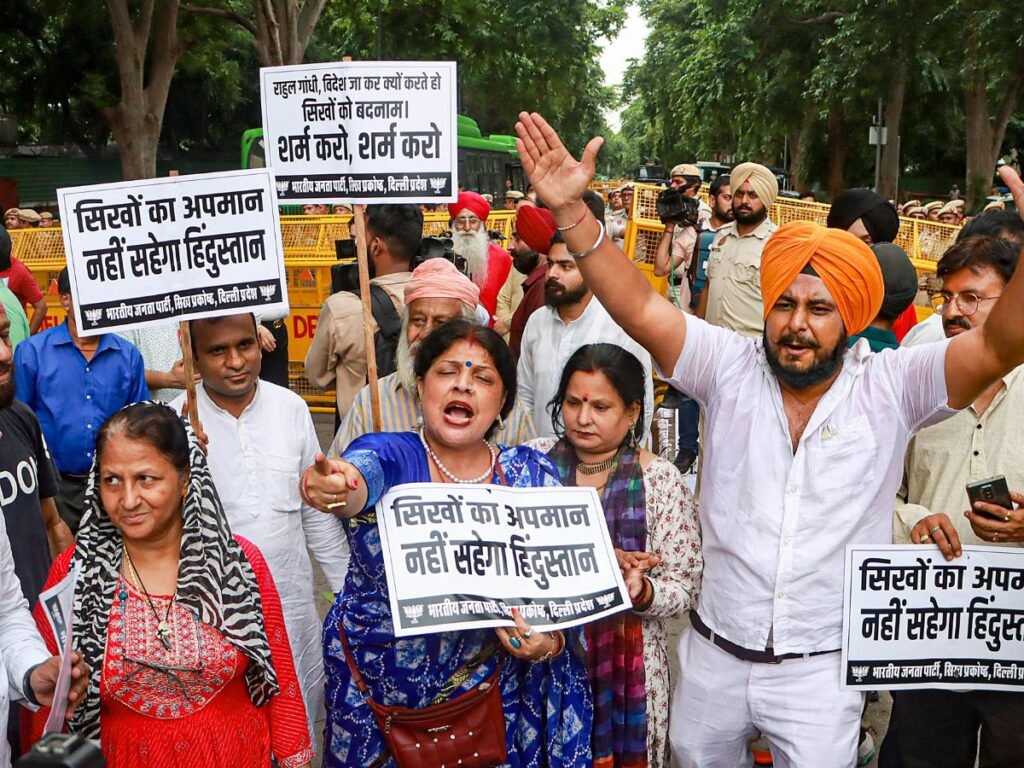
Rahul Gandhi Sikh remarks
Rahul Gandhi’s Sikh Remark Sparks Controversy and Backlash
Rahul Gandhi’s recent remarks about the Sikh community in India during an event in the United States have ignited a political storm back home. The leader of the Opposition and senior Congress figure expressed concerns over the freedoms of Sikhs in India, questioning whether Sikhs are allowed to wear their turbans, kada, and visit Gurdwaras freely. These comments have drawn sharp criticism from the Bharatiya Janata Party (BJP) and support from Khalistani separatist leader Gurpatwant Singh Pannu, further intensifying the controversy.
Rahul Gandhi’s Remarks in Washington DC
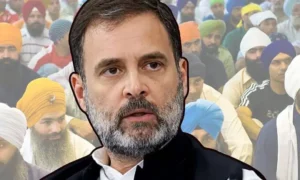
During an event in Washington DC, Rahul Gandhi addressed issues related to the Sikh community, stating, “First of all, you have to understand what the fight is about. The fight is not about politics. It is superficial. What is your name? The fight is about whether…he as a Sikh is going to be allowed to wear his turban in India. Or he as a Sikh is going to be allowed to wear a kada in India. Or a Sikh is going to be able to go to Gurdwara. That’s what the fight is about and not just for him, for all religions.” These comments by Rahul Gandhi sparked immediate backlash from Indian political leaders.
BJP’s Strong Response: Accusations of Anti-India Narratives
The BJP accused Rahul Gandhi of maligning India’s image abroad and creating a “dangerous narrative.” Union Minister Hardeep Singh Puri criticized Rahul Gandhi’s remarks, calling them “sinister” and accusing him of spreading falsehoods among the Sikh community in the US, who are largely disconnected from India’s current realities.
“I think this is far more sinister because Rahul Gandhi was trying to spread a false narrative while speaking in front of those, who belong to my community and are trying to eke out a living in the US with hard work and honesty. Because they do not have much connection with the country (India),” Puri stated.
Comparisons to Vajpayee and Accusations of Anti-India Sentiment
Former Madhya Pradesh Chief Minister Shivraj Singh Chouhan also condemned Rahul Gandhi’s Sikh remarks, contrasting them with the conduct of former Leader of Opposition Atal Bihari Vajpayee. Chouhan emphasized that Vajpayee never spoke ill of India abroad, regardless of domestic political differences. He attributed Rahul Gandhi’s comments to anti-BJP, anti-RSS, and anti-Modi sentiments resulting from electoral defeats.
BJP leader R P Singh further challenged Rahul Gandhi to make the same statements in India, threatening legal action if he did. “About 3000 Sikhs were massacred in Delhi; their turbans were taken off, their hair was chopped off and beard was shaved…He (Rahul Gandhi) doesn’t say that this happened when they (Congress) were in power…I challenge Rahul Gandhi to repeat in India what he is saying about Sikhs, and then I will file a case against him and will drag him to court,” Singh asserted.
Support from Separatist Leader Gurpatwant Singh Pannu
Khalistani separatist leader Gurpatwant Singh Pannu, the co-founder of the banned outfit Sikhs for Justice, voiced support for Rahul Gandhi’s Sikh remarks, calling them bold and grounded in historical facts. Pannu stated, “Rahul’s statement on ‘existential threat to Sikhs in India’ is not only bold and pioneering but is also firmly grounded in the factual history of what Sikhs have been facing under successive regimes in India since 1947 and also corroborates SFJ’s stance on the justification for Punjab Independence Referendum to establish Sikh homeland Khalistan.”
Protests Against Rahul Gandhi’s Remarks
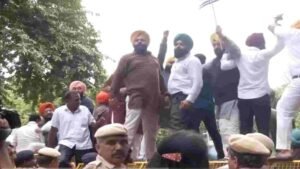
Rahul Gandhi’s Sikh remarks led to protests by the Delhi BJP’s Sikh cell near Sonia Gandhi’s residence at 10 Janpath. Protesters, including women, marched from Vigyan Bhawan but were stopped by the police. They demanded an apology from Rahul Gandhi, accusing him of humiliating Sikhs and holding the Congress responsible for the 1984 anti-Sikh riots.

Conclusion
Rahul Gandhi’s Sikh remarks have sparked a significant political debate, drawing criticism from the BJP for allegedly maligning India abroad and receiving support from Khalistani separatist Gurpatwant Singh Pannu. As the controversy unfolds, the focus remains on how these statements will impact the ongoing discourse around minority rights and historical grievances in India. The political implications of these remarks highlight the sensitivities surrounding communal issues in the Indian political landscape.
Disclaimer:
The content provided is based on current events and is intended for informational purposes only. It does not reflect any personal opinions or endorsements. For specific legal or political advice, please consult a qualified professional.