Alina
Alina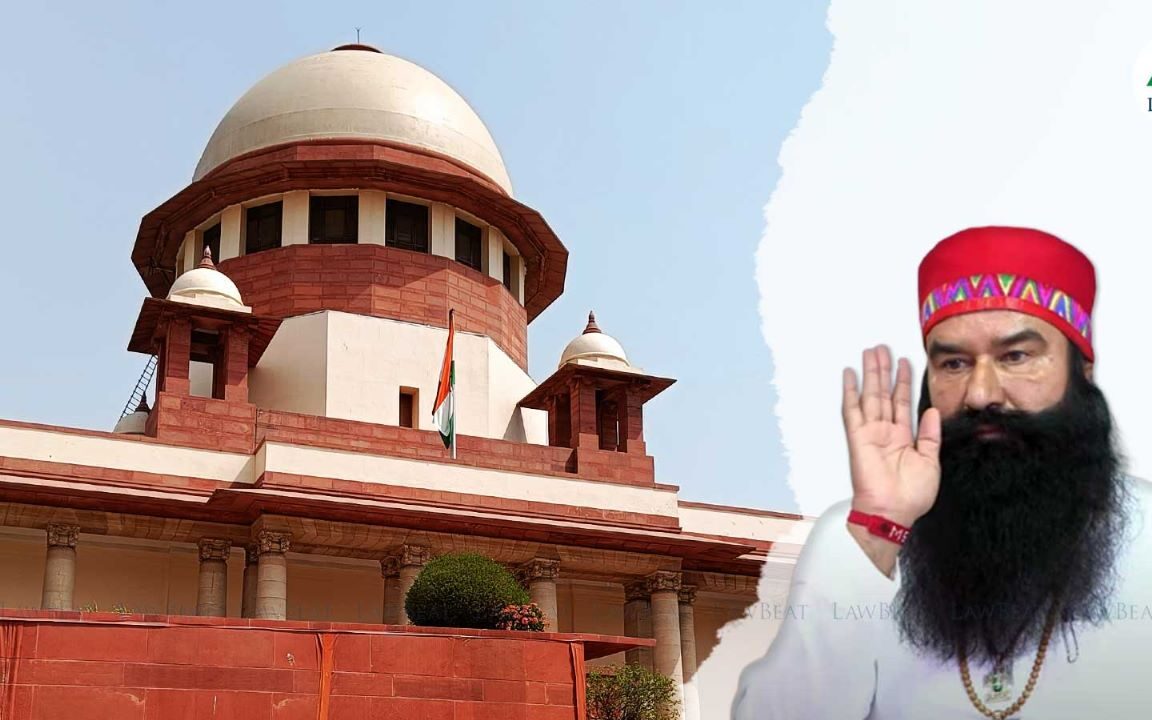
Supreme Court Allows Ram Rahim Trial
Supreme Court Clears Way for Ram Rahim Sacrilege Trial
The Supreme Court has taken a significant step forward by clearing the path for the trial of Dera Sacha Sauda chief Gurmeet Ram Rahim Singh in the 2015 sacrilege cases. This development comes after the apex court vacated a stay order previously issued by the Punjab and Haryana High Court, which had halted the trial. Ram Rahim sacrilege trial will now proceed, offering a chance for judicial resolution after years of legal delays.
Background of the Case
Ram Rahim sacrilege trial pertains to three cases registered in 2015 at the Bajakhana Police Station in Faridkot, Punjab. These cases were initially investigated by the Central Bureau of Investigation (CBI) but were later transferred to local courts. The Punjab government’s decision to withdraw the cases from the CBI led to legal challenges, with Ram Rahim questioning the validity of this decision in the Punjab and Haryana High Court.
In February 2023, the Supreme Court transferred the trial from a court in Faridkot to Chandigarh, aiming for a more centralized proceeding. Despite this, the Punjab and Haryana High Court issued a stay on the trial in March 2024, pending a decision on several legal questions, such as whether the state government could withdraw consent for a CBI investigation.
Supreme Court’s Intervention
The Supreme Court‘s decision to vacate the stay order marks a crucial turning point in the Ram Rahim sacrilege trial. The bench comprising Justices B.R. Gavai and K.V. Vishwanathan directed Gurmeet Ram Rahim Singh to submit a response, thus moving the legal process forward. The court acted on a plea from the Punjab government, which sought to resume the trial in the sacrilege cases.
The apex court emphasized the importance of examining the legal questions involved, especially regarding the transfer of the case from CBI back to state jurisdiction. It has scheduled the next hearing for four weeks later, where more detailed arguments will be presented. Until then, the Ram Rahim sacrilege trial remains a topic of legal and public interest.
High Court’s Previous Stand
In March 2024, the Punjab and Haryana High Court issued an interim order that stayed the trial proceedings against Ram Rahim. The order was issued while referring key legal questions to a larger bench for further consideration. The questions included whether a state government has the authority to withdraw its consent for a CBI investigation after the probe has begun. Due to these unresolved issues, the high court had halted the trial to ensure that all legal nuances were thoroughly examined.
Parole and Restrictions on Ram Rahim
While the Ram Rahim sacrilege trial continues, the Dera chief has been in the spotlight for other reasons as well. The Haryana government recently granted him a 20-day parole. However, strict conditions were imposed, preventing him from participating in any election-related activities or leaving the state of Haryana during this period. This development has been a point of discussion, given Ram Rahim’s prior criminal convictions, including a 20-year sentence handed to him in 2017 for allegedly raping two of his disciples.

Past Convictions and Ongoing Legal Issues
Gurmeet Ram Rahim Singh is already serving a 20-year sentence for rape, following a conviction in 2017. Additionally, he and three associates were convicted in 2019 for the murder of a journalist that took place over 16 years ago. The Ram Rahim sacrilege trial adds to a series of high-profile cases involving the Dera Sacha Sauda chief, reflecting the complex intersection of religion, power, and law.
Next Steps in the Ram Rahim Sacrilege Trial
The Supreme Court’s recent decision to allow the trial to proceed provides a crucial opportunity for justice in the Ram Rahim sacrilege trial. The court’s directive for Ram Rahim to respond to the notice means that the case will continue to evolve over the coming weeks. As the legal proceedings move forward, it remains to be seen how the arguments presented by both sides will shape the final verdict.
The Ram Rahim sacrilege trial is expected to have significant implications not only for the individuals involved but also for the broader legal and political landscape in Punjab. As the judicial process unfolds, it will be important to monitor how the balance between state and central jurisdiction is addressed, and what it means for future cases of similar nature.
Disclaimer: The information provided in this article is based on public reports and legal proceedings. It is not intended to defame or harm any individual or group. Readers are encouraged to consult official court records for the most accurate and up-to-date details.