Alina
Alina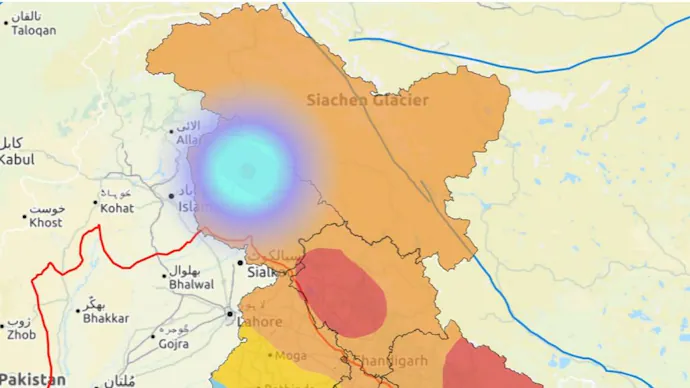
Mild Tremor Shakes Kashmir Valley
Mild Tremor Shakes Kashmir Valley
The earth beneath the Kashmir Valley stirred momentarily on Thursday afternoon, serving as a gentle yet potent reminder of the powerful geological forces that lie dormant beneath its breathtaking landscape. At precisely 1:41 PM, a minor earthquake measuring 3.5 on the Richter scale jolted the region, its epicenter located in the Kupwara district of North Kashmir. While the tremor was significant enough to be felt by residents across several areas, including the capital city of Srinagar, officials from the Jammu and Kashmir State Disaster Management Authority were quick to confirm that there were no immediate reports of any injury to people or damage to property. The event, though minor, immediately reignited conversations about the region’s precarious position in one of the world’s most seismically active zones.
The science behind the tremor provides crucial context. According to data released by the National Center for Seismology (NCS), the quake originated at a shallow depth of just five kilometers beneath the earth’s surface, at a latitude of 34.68 degrees north and a longitude of 74.39 degrees east. The shallowness of an earthquake is a critical factor in how it is perceived on the surface. Seismic energy from a shallow quake has less distance to travel and dissipate before reaching the ground, often making it feel more intense to people in the immediate vicinity of the epicenter than a deeper, stronger quake might feel farther away. This explains why residents in Kupwara and surrounding districts reported distinct shaking and rattling of windows, while those in farther-off areas experienced only a subtle, fleeting wobble.
The choice of the Richter scale for measurement is significant. Developed in 1935 by Charles F. Richter, this logarithmic scale measures the amplitude of seismic waves produced by an earthquake. Each whole number increase on the scale represents a tenfold increase in measured amplitude and approximately 31.6 times more energy release. In practical terms, a magnitude 3.5 earthquake is classified as a minor event. It is often felt by people indoors, especially on upper floors of buildings, but it rarely causes any significant damage. It is a common occurrence in tectonically active regions like Kashmir, which sits on the complex and volatile boundary of the Indian and Eurasian tectonic plates. The relentless northward collision of the Indian plate into the Eurasian plate is the primary engine behind the creation of the mighty Himalayas and is the source of continual seismic stress that is released through such tremors. The immediate public response to the quake was a mixture of brief alarm and swift normalization. Social media platforms became the first outlet for people to share their experiences, with many posting “Did you feel that?” messages within seconds of the tremor subsiding. This real-time crowdsourcing of information has become a modern-day tool for validating such events. For a few tense minutes, families gathered outside their homes, checking on neighbors and elderly relatives, a practiced drill born from lived experience and awareness of their environment. However, the all-clear was given almost as quickly as the tremor had arrived. The absence of any loud noises, structural cracks, or power disruptions allowed life to return to its usual rhythm swiftly.
However, this minor event serves as a critical drill and a stark reminder. Kashmir falls in seismic Zone V, the highest-risk category in India’s seismic zoning map, putting it on par with other extremely vulnerable regions like Guwahati and parts of the Northeast. This zone is capable of producing catastrophic earthquakes with a magnitude of 8.0 or greater on the Richter scale. The region has a devastating history with major quakes, most notably the 2005 Kashmir earthquake, a magnitude 7.6 event whose epicenter was near Muzaffarabad and which resulted in a tragic and immense loss of life and property on both sides of the Line of Control.
This context is what makes every tremor, no matter how small, a subject of serious attention for disaster management officials. Following the Thursday afternoon event, standard operating protocols were activated. While no damage was reported, local authorities in Kupwara and other districts were instructed to remain on alert for any potential aftershocks, however unlikely they might be for a quake of this size. Officials also reiterated the importance of public awareness and preparedness. They emphasize that while major earthquakes cannot be predicted or prevented, their impact can be massively mitigated through proactive measures.
This includes public education on the “Drop, Cover, and Hold On” protocol during a quake, the enforcement of strict building codes designed to be earthquake-resistant, and the establishment of clear evacuation routes and emergency communication plans. The 3.5 magnitude tremor was a nudge from nature—a small, harmless one this time, but a clear warning to stay vigilant. It underscores the non-negotiable need for robust infrastructure, continuous public drills, and a well-funded, efficient disaster response mechanism. For the people of Kashmir, living with seismic risk is a part of daily life, and each small tremor reinforces the resolve to be prepared for the day when the earth might not be so gentle.