Alina
Alina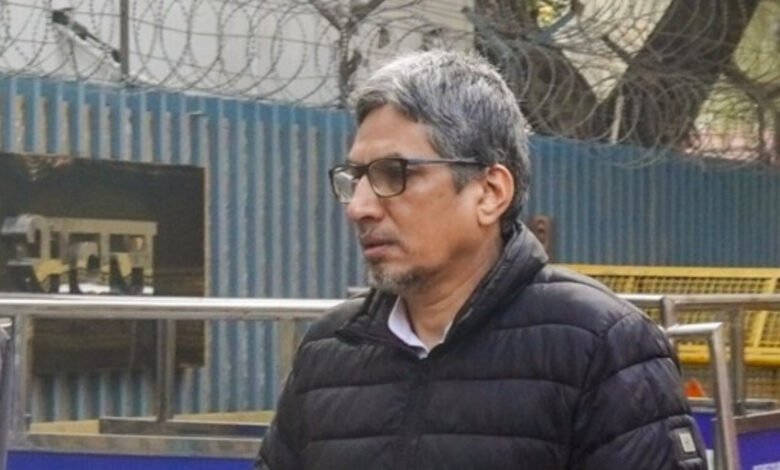
Delhi Court Rejects Siddiqui Bail
Delhi Court Denies Interim Bail To Al-Falah Chairman In ED Case
A Delhi court on Tuesday, June 9, rejected the interim bail plea of Jawad Ahmad Siddiqui, chairman of Al-Falah University, who is currently facing allegations in a Rs 493-crore money laundering case being investigated by the Enforcement Directorate (ED).
The court ruled that Siddiqui failed to prove that his presence was indispensable for caring for his wife, who is currently undergoing treatment for stage-4 metastatic ovarian cancer. While acknowledging her serious health condition, the court observed that medical records described her condition as stable and did not establish that she required the accused’s exclusive care.
The case has gained national attention due to the seriousness of the allegations, which involve claims of financial irregularities, fund siphoning, fake accreditation claims, and money laundering linked to Al-Falah University.

Court Rejects Six-Week Interim Bail Request
The bail plea was heard by Additional Sessions Judge Sheetal Chaudhary Pradhan, where Siddiqui sought six weeks of interim bail to care for his ailing wife.
Siddiqui’s legal counsel argued that his wife was suffering from advanced-stage ovarian cancer and required emotional and physical support during treatment. The defense requested temporary relief on humanitarian grounds.
However, after reviewing medical reports and other submissions, the court declined the plea.
In its observation, the court noted that Siddiqui had not demonstrated that his wife was terminally ill, bedridden, or unable to manage her daily routine.
The court order reportedly stated:
“The applicant has failed to show that the wife is terminally ill or is unable to take care of her daily routine and requires constant support of the accused.”
This observation became central to the court’s decision to reject the interim bail request.
Medical Reports Played Key Role
According to the court, medical documents submitted during the hearing indicated that Siddiqui’s wife was receiving treatment and her condition was medically categorized as stable.
The court further observed that although the illness was undoubtedly serious, there was no indication that she required round-the-clock assistance exclusively from Siddiqui.
Judges often evaluate humanitarian bail requests on the basis of medical urgency and the absence of alternative caregivers. In this case, the court reportedly found that Siddiqui had failed to establish either condition.
The court stated that other family members could adequately assist during the treatment period.
Adult Children Can Provide Care, Says Court
Another major factor influencing the court’s decision was the presence of Siddiqui’s adult children.
The court remarked that adult children are expected to take care of their parents in emergencies, particularly when a family member is undergoing serious medical treatment.
Rejecting the argument that Siddiqui alone could provide care, the judge noted that caregiving responsibility could reasonably be shared by family members.
The court observed:
“It is expected from adult children to take care of their parents in such emergent situations.”
The remarks reflected the judiciary’s view that interim bail on medical or family grounds requires proof that no alternative support system exists.
How Siddiqui Landed In Legal Trouble
Jawad Ahmad Siddiqui was first arrested in February 2026 by the Delhi Police Crime Branch in connection with allegations of financial and administrative irregularities at Al-Falah University.
The matter later escalated when the Enforcement Directorate (ED) stepped in and registered a money laundering investigation.
In March 2026, Siddiqui was taken into ED custody under provisions of the Prevention of Money Laundering Act (PMLA).
Authorities allege that Siddiqui played a central role in financial misconduct linked to the institution.
Rs 493 Crore Money Laundering Allegations
According to the Enforcement Directorate, the university allegedly generated around Rs 493.24 crore in proceeds of crime through deceptive practices.
The ED claims that Al-Falah University misled students and parents by allegedly making false claims about accreditation and official recognition.
Investigators alleged that the institution promoted itself using claims related to:
- NAAC accreditation
- UGC recognition
- Educational standards and affiliations
Authorities claim these alleged misrepresentations attracted admissions and fee payments from students and parents.
The money collected through these means is alleged to have been illegally diverted.
ED Alleges Fund Diversion Through Trust
The Enforcement Directorate further alleged that Siddiqui siphoned money from the Al-Falah Charitable Trust, which is linked to the university.
According to investigators, funds were allegedly transferred into:
- Personal bank accounts
- Investment channels
- Related business entities
The ED claims multiple entities were used as conduits to launder the money and conceal financial transactions.
These allegations form the core of the money laundering investigation.
The agency is reportedly examining financial records, bank transactions, and linked entities to trace the flow of funds.
University Faced Earlier Scrutiny
The controversy surrounding Al-Falah University deepened after the institution came under scrutiny in another high-profile matter.
Authorities reportedly found that Dr Umar Nabi, an accused in the November 2025 Red Fort blast case, had previously been employed at the university.
The blast allegedly killed 12 people, triggering one of the biggest national security investigations in recent years.
Although the employment connection itself is separate from the money laundering case, it brought additional public attention to the university and its administration.
Investigators are examining multiple aspects of institutional compliance and governance.
What Is Interim Bail?
Interim bail is temporary relief granted to an accused person for a limited period under exceptional circumstances.
Courts may grant interim bail for reasons such as:
- Serious medical emergencies
- Family tragedies
- Critical caregiving responsibilities
- Humanitarian grounds
However, judges generally require strong supporting evidence to establish that the accused’s release is genuinely necessary.
In Siddiqui’s case, the court concluded that the conditions required for temporary relief were not sufficiently met.
Why The Court Refused Relief
Legal experts suggest the rejection stemmed mainly from three factors:
1. Wife’s Condition Was Stable
Though suffering from a severe illness, medical records reportedly described Siddiqui’s wife as stable.
2. No Exclusive Dependency
The court found insufficient proof that only Siddiqui could care for his wife.
3. Family Support Was Available
Adult children and caregivers were available to assist during treatment.
Because of these reasons, the court held that Siddiqui failed to establish exceptional circumstances warranting interim bail.
ED Investigation Likely To Continue
With the bail plea dismissed, the Enforcement Directorate’s probe into the Rs 493-crore alleged money laundering case is expected to continue.
Investigators are likely to focus on:
- Financial transaction trails
- University fund utilization
- Alleged fake accreditation claims
- Trust account operations
- Linked companies and investments
The case could also lead to further arrests or attachment of assets if investigators uncover additional evidence.
Growing Debate Around Private Universities
The case has once again reignited concerns about financial transparency in private educational institutions.
Experts believe stronger monitoring mechanisms are required to prevent:
- Misleading accreditation claims
- Financial mismanagement
- Student exploitation
- Lack of institutional accountability
Parents and students often depend heavily on university claims regarding approvals and rankings, making regulatory oversight critical.
Conclusion
The Delhi court’s rejection of interim bail for Al-Falah University chairman Jawad Ahmad Siddiqui marks an important development in the Rs 493-crore Enforcement Directorate investigation.
While the court acknowledged the seriousness of his wife’s illness, it ruled that sufficient caregiving alternatives existed and that Siddiqui had failed to establish the need for his exclusive presence.
As the ED continues its investigation into allegations of money laundering, financial diversion, and deceptive university practices, the case is likely to remain under close public and legal scrutiny in the coming months.
Disclaimer: This article is based on publicly available reports and court observations. Allegations mentioned are part of an ongoing investigation, and the accused is presumed innocent unless proven guilty in a court of law.