Alina
Alina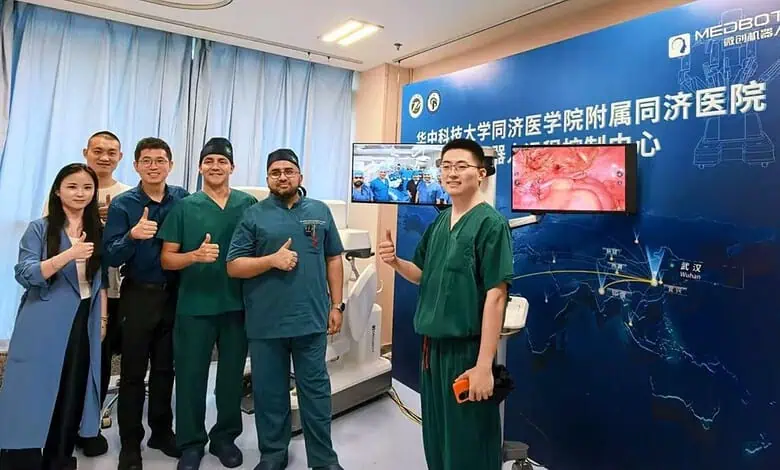
Hyderabad Patient Gets Remote Surgery
Dr Ghouse Performs Robotic Surgery on Hyderabad Patient From 3,000 Km Away
In a remarkable medical breakthrough, Hyderabad witnessed a milestone in advanced healthcare after Indian doctor Dr Syed Mohammed Ghouse successfully performed a robot-assisted surgery on a Hyderabad patient while being seated nearly 3,000 kilometres away in Wuhan, China.
The innovative surgery highlights the growing role of robotics and high-speed internet in modern healthcare, opening new possibilities for patients who may not have access to specialist doctors in their city or country.
90-Minute Bladder Reconnection Surgery
The procedure involved a bladder reconnection surgery, which reportedly lasted for 90 minutes and was completed using robotic surgical technology developed in China.
The surgery was coordinated between medical teams at Tongji Hospital and healthcare professionals stationed in Hyderabad.
While Dr Ghouse remotely controlled the robotic system from Wuhan, the Hyderabad-based medical team prepared the patient by:
- Administering anaesthesia
- Positioning robotic instruments
- Monitoring the patient throughout the operation
- Remaining on standby for emergencies
This collaborative effort ensured patient safety while enabling highly specialized surgical expertise from another country.
How the Technology Worked
According to reports, the robotic system used microsurgical instruments and high-definition 3D cameras that precisely mirrored the hand movements of Dr Ghouse in real time.
One of the biggest technological achievements behind the surgery was the use of a 5G communication network, which transmitted commands with a delay of only around 200 milliseconds.
This ultra-low latency allowed the surgeon to perform delicate medical procedures with high precision despite being thousands of kilometres away.
Such advancements demonstrate how modern communication networks and robotics can potentially transform healthcare delivery across borders.
China-India Medical Collaboration
The breakthrough attracted international attention after Yu Jing, spokesperson of the Chinese Embassy in India, shared details of the surgery on social media platform X.
She described the achievement as a medical breakthrough transcending borders, highlighting growing collaboration in medical innovation between India and China.
The event reflects how international partnerships are increasingly contributing to technological developments in medicine.
Part of Major Global Medical Conference
The surgery was one of 26 procedures showcased during the 10th Congress of the Chinese Chapter of the International Hepato-Pancreato-Biliary Association.
10th Congress of the Chinese Chapter of the International Hepato-Pancreato-Biliary Association featured multiple advanced surgical demonstrations.
Among them, five surgeries involved live international remote collaborations, with medical specialists participating from countries such as:
- India
- Brazil
- Georgia
- Greece
- Uzbekistan
The demonstrations showcased the potential for specialists across continents to perform surgeries without physically being in the same operating room.
What This Means for Healthcare
Remote robotic surgeries could significantly impact healthcare accessibility in the future.
Potential benefits include:
Faster Access to Specialists
Patients in smaller cities or remote regions may receive treatment from highly experienced surgeons without travelling long distances.
Improved Emergency Medical Support
In critical cases, global specialists could assist local doctors during complicated surgeries.
Medical Training and Collaboration
Doctors from different countries can collaborate in real time, improving surgical education and patient outcomes.
However, challenges such as internet reliability, infrastructure costs, legal regulations, and cybersecurity remain important factors for large-scale adoption.
Conclusion
The successful robot-assisted surgery performed by Dr Syed Mohammed Ghouse on a Hyderabad patient from Wuhan marks a major step forward in modern medicine. Powered by robotics, high-definition imaging, and ultra-fast 5G technology, the procedure demonstrates how geographical barriers in healthcare are gradually disappearing.
As medical technology continues to evolve, remote surgeries like this could redefine the future of specialized